
Pre-Operational Inspection Procedures
Visual Inspection of the Conveyor Belt – Check for wear, tears, or damage to the belt surface and edges
A thorough pre-operational inspection is the unseen guardian of conveyor belt safety! When a conveyor is in motion, even the smallest tear or surface irregularity can escalate into a catastrophic failure. That’s why a meticulous visual inspection of the conveyor belt is critical before each shift begins. It’s a moment of quiet vigilance—scanning the belt surface and edges for wear, tears, or other damage that might compromise the entire operation.
Unseen hazards lurk beneath apparent imperfections, and spotting them early can prevent costly downtime or accidents. During inspection, pay close attention to areas prone to damage, such as belt edges, splice points, and tension zones. For an extra measure of safety, develop a conveyor belt safety checklist that includes:
- Checking belt surface for tears or cuts
- Inspecting edges for fraying or damage
- Assessing tension and alignment
Remember, safety begins long before machinery hums to life, and the key lies in diligent, detailed checks that keep everyone safe from the perils of overlooked damage.
Wear and Tear of Mechanical Components – Inspect rollers, pulleys, gears, and bearings for signs of wear or damage
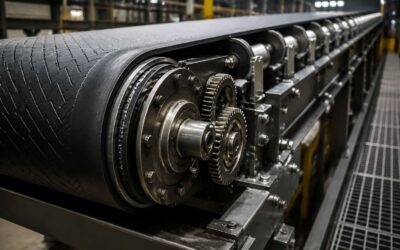
Every conveyor system is a vital artery in industrial environments, pulsating with motion and purpose. Yet beneath this seamless flow, mechanical components like rollers, pulleys, gears, and bearings endure relentless stress—wear and tear that can compromise safety if overlooked. In high-stakes settings, a simple misstep can lead to unexpected downtime or worse, workplace injuries.
During pre-operational inspections, it’s crucial to meticulously examine these mechanical parts for signs of deterioration. Look for cracked or worn rollers, slipping or misaligned pulleys, and bearings making unusual noises—any anomaly demanding immediate attention. By integrating these checks into a comprehensive conveyor belt safety checklist, operators can identify issues before they escalate.
- Inspect rollers for smooth rotation and evidence of corrosion.
- Examine pulleys for uneven wear, cracks, or misalignment.
- Assess gears for damaged teeth or excessive backlash.
- Check bearings for noise, overheating, or looseness.
This diligent process ensures the mechanical heart of the conveyor remains resilient—protecting workers and safeguarding productivity in all environments, from bustling factories to quiet rural processing plants. Because when it comes to conveyor belt safety, prevention is always better than repair.
Safety Signage and Emergency Stops – Ensure all safety labels are visible and emergency stop buttons are functional
In the bustling realm of industry, where machinery hums as the heartbeat of productivity, the first step towards safety is often overlooked—yet it’s the most vital. A comprehensive conveyor belt safety checklist isn’t just a ritual; it’s the guardian ensuring that every pulse of movement remains secure and hazard-free. Among the essential elements, safety signage and emergency stops stand as the silent sentinels, whispering warnings and offering instant respite in times of peril.
Prior to operation, it’s imperative to verify that all safety labels are brightly visible, correctly positioned, and in pristine condition. These signs serve as vital communication, guiding workers through the dance of safety principles embedded within the conveyor’s rhythm. Simultaneously, testing the emergency stop buttons should become a routine—each press an affirmation that in an instant, chaos can be tamed and danger averted.
- Ensure emergency stop buttons are easily accessible and functioning properly.
- Confirm all safety labels are clear, intact, and prominently displayed.
- Check that warning signs reflect current safety protocols, updating them if necessary.
When safety signage and emergency stop measures are seamlessly integrated into the conveyor belt safety checklist, the industrial symphony continues without discord—protecting lives and maintaining the flow of productivity in every South African industry where conveyor systems pulse with purpose.
Lubrication and Maintenance Checks – Verify proper lubrication of moving parts to prevent friction and overheating
When it comes to conveyor belt safety, skipping routine maintenance is like playing Jenga with a stack of dynamite—you never know when it will come crashing down. Proper lubrication of moving parts isn’t just a good idea; it’s an essential part of the conveyor belt safety checklist. Over time, unlubricated components can lead to excessive friction, overheating, and eventually catastrophic failure. Trust me, a single overheated pulley can turn into a costly nightmare that halts production longer than a provincial election delay.
To prevent this, schedule regular lubrication checks—here’s a quick rundown:
- Inspect all rollers, pulleys, and bearings for signs of dryness or grime buildup.
- Apply the correct type of lubricant, ensuring it’s compatible with your conveyor system.
- Check for leaks or excess grease, which may indicate underlying issues.
Maintenance checks shouldn’t be a chore relegated to the end of the day. Instead, they act as the unsung heroes of your conveyor belt safety checklist. When done right, they keep things running smoothly—saving time, money, and a few nerve-wracking safety meetings. Because in the world of conveyor systems, well-oiled equipment isn’t just efficient; it’s safety squared.
Alignment and Tension Assessment – Ensure the belt is correctly aligned and tensioned to prevent slippage or tracking issues
When it comes to maintaining an efficient and safe conveyor belt system, not all checks are created equal—some are the backbone of the conveyor belt safety checklist, while others are mere window dressing. Alignment and tension assessment, for instance, often fly under the radar but are vital to forestall a cascade of mishaps, from slippage to tracking issues. A conveyor belt that isn’t properly aligned can mimic a drunk driver—veer off course at the most inopportune moments, jeopardising both safety and productivity.
Ensuring correct tension is equally crucial; too slack, and the belt risks slipping or bunching, too tight, and it accelerates wear and tear on mechanical components. Regularly inspecting those tension levels isn’t just preventative maintenance—it’s an act of prudence that can save countless hours and costly repairs.
Here’s a quick roadmap to guarantee your conveyor belt system remains true and taut:
- Check the belt’s alignment visually—look for deviation from the centre line.
- Adjust the tracking mechanism if any misalignment persists.
- Test the tension by applying a gentle pressure—if the belt shifts or feels overly tight, correction is needed.
Given how subtle misalignments can sometimes be, an astute maintenance team will adopt a rigorous routine, ensuring that every pulley and roller plays its role in a harmonious dance—rather than becoming a potential Achilles’ heel in the conveyor belt safety checklist. Because in this game, precision isn’t just a luxury; it’s a safeguard in itself.
Operational Safety Checks
Proper Guarding and Barriers – Confirm all protective covers and barriers are in place and securely fastened
Operational safety checks hinge not only on internal mechanisms but also on the integrity of protective barriers. Proper guarding and barriers serve as the first line of defense against accidental contact with moving parts. It’s astonishing how often overlooked, these shields are pivotal in preventing injuries in busy South African warehouses or factories. Ensuring all protective covers are in place and securely fastened transforms a routine conveyor belt safety checklist into a safeguard against disaster.
When inspecting guarding, look for any signs of damage or loosening that could compromise safety. Guarding needs to be rigid and properly aligned, especially around pinch points and rollers. The clarity of safety signage plays a vital role here—obscured or missing labels can lead to complacency and accidents. In addition, check that emergency stop barriers are not only functional but also accessible and free from obstructions.
- Confirm all guarding is intact and securely fastened.
- Verify safety shields cover hazardous moving parts.
- Ensure emergency stop barriers are unobstructed and operative.
Lockout/Tagout Procedures – Ensure lockout/tagout systems are in use during maintenance or obstruction removal
In the shadowed corridors of South African warehouses, where machinery hums like a restless beast, the importance of meticulous operational safety checks cannot be overstated. Lockout/tagout procedures are the silent guardians in this symphony of steel and motion, ensuring that when maintenance or obstruction removal occurs, no accidental engagement ignites a catastrophe. These systems serve as the barrier between chaos and order, halting all power and disposition of the conveyor belt to prevent calamity.
Effective lockout/tagout protocols demand unwavering discipline. Before any inspection or repair, follow a strict sequence: isolate the energy source, secure it with lockout devices, and affix clear tags indicating ongoing maintenance. This deliberate pause in the machine’s life-force is a ritual that safeguards lives. For added assurance, some facilities implement a numbered checklist—an ordered list that guarantees no step is overlooked. Remember, every link in the chain of safety is vital and hinges on vigilant adherence to the conveyor belt safety checklist.
When the machinery lies dormant under lock and key, the forest of gears and belts gains a fragile serenity. Yet, beneath this calm, the dangers linger, waiting for the breach of protocol. Ensuring these systems are in place transforms routine checks into a fortress of salvation—a testament to the unyielding commitment to human life amid the mechanized chaos. Safety is not merely an obligation; it is the silent oath sworn to those who command the relentless engine of progress.
Employee Training and PPE Compliance – Verify operators are trained and wearing appropriate personal protective equipment
In the shadowed corridors of South African warehouses, where the relentless pulse of machinery echoes like a heartbeat in the dark, human vigilance is the only shield against catastrophe. Effective conveyor belt safety checklist procedures hinge on comprehensive employee training and unwavering PPE compliance. When operators, clad in sturdy protective gear, have imbued themselves with an intimate understanding of the machinery’s clandestine language, the risk of mishaps diminishes. It’s not merely about donning safety helmets and gloves—it’s about internalizing the silent oath of obligation to safeguard life and limb in the mechanized theatre.
Maintaining this silent oath requires more than routine recognition; it demands rigorous training sessions that transform new recruits into vigilant sentinels of safety. Every operator must be intimately familiar with the intricacies of the conveyor system, capable of recognizing the whisper of wear or the faint shudder of impending failure. This mastery is nourished through ongoing education, an unyielding commitment to understanding the nuances of the conveyor belt safety checklist. Remember, a well-trained operator is the first line of defense in the cryptic dance of gears and belts—an essential safeguard that transforms routine checks into a fortress of protection.
- Ensure PPE includes safety glasses, gloves, and steel-toed boots to shield against unforeseen hazards.
- Verify operational knowledge of emergency stop mechanisms and safety signage visibility to prevent accidental engagement or errors.
- Conduct periodic drills that reinforce proper use of barricades and guarding devices, acting as invisible shields in the dark corridors of industrial chaos.
Without this meticulous adherence to PPE compliance and training, even the most advanced conveyor belt safety checklist risks becoming a hollow ritual—an echo in a cavern of negligence. The safety of those who command the relentless machinery sacrifices nothing to routine; instead, it demands a vigilant, ever-awareness that transforms safety from obligation to an unbreakable creed. In this mechanized symphony, human consciousness is the true conductor—guiding each movement with purpose and care.
Monitoring of Load Limits – Check that load weights are within the conveyor’s rated capacity
Ensuring safety on conveyor systems isn’t just about routine inspections; it’s about a vigilant eye on every load passing through. Monitoring load limits is crucial in preventing overloading, which can cause catastrophic failures or damage to the conveyor belt. Each article carried must stay within the rated capacity to maintain structural integrity and safety. Overloading not only strains components but also increases the risk of accidents that could endanger personnel working in the shadowy corridors of South African warehouses.
To help keep loads in check, utilize a straightforward process: before each shift, verify the weight of cry of each batch against the conveyor’s specified limit. For continuous safety assurance, a simple
- weighing scale
- load sensors
- manual checks
can become part of your conveyor belt safety checklist. Regular monitoring ensures that operators are not unknowingly pushing the machinery beyond its safe limits, fostering a culture where safety becomes second nature in the dance of gears and belts. When load limits are respected, machinery runs smoother, and worker safety remains uncompromised, transforming the conveyor into a reliable servant rather than a ticking hazard.
Startup and Shutdown Protocols – Follow standard procedures to prevent sudden starts and stops that may cause hazards
Every conveyor system is the lifeline of a bustling warehouse, especially here in South Africa where logistics pulse with relentless energy. Yet, even the most robust conveyor belt safety checklist must include vigilant startup and shutdown protocols. The danger lies in abrupt starts or stops—moments when machinery can seize, slip, or even cause personnel injuries. To prevent these hazards, it’s essential to follow a structured procedure that ensures every movement is deliberate and controlled.
Commence each shift with a thorough safety check, verifying that all safety controls are engaged and functioning. During shutdown, confirm that the conveyor belt has come to a complete halt, and conduct a visual inspection for any irregularities or potential hazards. Incorporating a standardized sequence not only minimizes risk but also extends the lifespan of mechanical components, averting unexpected failures. An effective conveyor belt safety checklist emphasizes the importance of these procedures, safeguarding both the machinery and the workers behind it.
- Ensure emergency stops are accessible and operational before starting any operation.
- Verify that all guards and barriers are in place to prevent accidental contact with moving parts.
- Initialize the conveyor system gradually, avoiding sudden acceleration that could unsettle loads or operators.
- During shutdown, disengage the power source only after confirming the conveyor has fully stopped, and conduct a walk-around inspection to identify potential issues.
Adhering to these steps transforms everyday operations into a sequence of safe, predictable events—protecting personnel and enhancing productivity. The artistry of maintaining a conveyor belt safety checklist isn’t just about ticking boxes; it’s about creating a fortress of safety that quietly whispers confidence in every shift. When safety becomes second nature, the conveyor becomes not just a tool but a steadfast partner in the daily dance of throughput and efficiency.
Emergency Preparedness and Response
Emergency Stop Functionality – Test emergency stop buttons regularly for proper operation
In the orchestrated dance of industrial efficiency, the emergency stop function of a conveyor belt acts as a vital safeguard—a lifeline in moments of peril. Regular testing of emergency stop buttons isn’t just a protocol; it’s an unwavering commitment to worker safety. When these buttons are properly operational, they serve as a swift barrier against unforeseen incidents, transforming potential chaos into controlled halt.
Ensuring emergency responsiveness extends beyond mere functionality. It involves a rigorous conveyor belt safety checklist that underscores the importance of prompt and reliable shutdown capabilities. Incorporating scheduled drills and inspections keeps personnel attuned to emergency procedures, fostering a culture where safety isn’t reactive but ingrained.
- Press the emergency stop button to verify the conveyor halts immediately.
- Inspect the reset mechanism to confirm it returns smoothly to its operational state.
- Check surrounding signage and safety instructions are visible and legible.
- Train staff to react swiftly and correctly during emergency scenarios.
In the demanding environment of South African industries, where machinery often operates with relentless persistence, maintaining the integrity of emergency stop functions isn’t just protocol but a moral obligation. Every push of that button, every inspection, anchors a safety culture that values lives over productivity alone. The comprehensive conveyor belt safety checklist ensures these critical safety features remain reliable, ready to act when most needed.
First Aid and Emergency Equipment Readiness – Ensure first aid kits and fire extinguishers are accessible and maintained
In the relentless rhythm of industrial operations, the importance of emergency preparedness cannot be overstated. Ensuring that first aid kits and fire extinguishers are not only accessible but meticulously maintained is a moral imperative—an unyielding safeguard against the unpredictable chaos of machinery mishaps. The human element, after all, is never just a cog in the machine but the very soul that sustains safety in moments of crisis.
Scheduled inspections and clear signage are pivotal in fostering swift, confident responses. A well-equipped first aid kit—fully stocked, checked regularly, and strategically placed—becomes a beacon of hope amidst potential tragedy. Fire extinguishers, on the other hand, must be inspected for functionality and visibility, ready to quell the flames before they spiral beyond control.
- Conduct routine drills with staff, emphasizing correct emergency response protocols.
- Ensure Safety signage remains visible and unambiguous.
- Verify the functional status of all first aid and fire safety equipment periodically.
Understanding that the machinery we operate in South African industries often pushes the boundaries of resilience, a comprehensive conveyor belt safety checklist not only upholds operational integrity but also signifies respect for human lives. When human safety is prioritized over simple productivity, the true essence of responsible stewardship emerges—an unyielding commitment to preserve life at the core of industrial endeavor.
Clear Signage and Communication Systems – Maintain clear signage for emergency procedures and communication devices
In the intricate dance of industrial machinery, clarity is the silent conductor guiding safety harmony. Clear signage for emergency procedures is more than just a visual cue—it’s the biological equivalent of a lighthouse, piercing through chaos to guide personnel safely to the shore. In South African industries, where every second counts, the power of unambiguous communication becomes a vital part of the conveyor belt safety checklist. Well-placed signs and signals are your first line of defense, signaling hazards and guiding responses with unwavering clarity.
Communication devices such as intercoms, alarms, and emergency radios forge invisible threads of flow—ensuring that voices of caution and commands cut through the drone of machinery. Their strategic placement and functional integrity can mean the difference between swift resolution and perilous delays. Routine tests and maintenance of these tools are non-negotiable, as they are the lifeblood of real-time safety coordination during critical moments.
In safeguarding life and machinery, the integration of effective signage and reliable communication systems weaves a resilient safety fabric—an intricate safeguard woven into the very fabric of your conveyor belt safety checklist. This synergy transforms reactive responses into deliberate actions, grounded in clarity and confidence. Because in the realm of industrial safety, ensuring everyone is on the same page is not just protocol—it’s paramount to preserving human life amidst the relentless motion of industry’s heartbeat.
Staff Emergency Response Training – Conduct regular safety drills and training sessions for employees
Safety is the backbone of efficient conveyor belt operations. In South African industries, where workplace accidents can have severe consequences, effective emergency preparedness is vital. Regular staff emergency response training ensures everyone knows their role when it matters most. Well-trained employees react swiftly, reducing downtime and preventing injuries. These sessions reinforce the importance of adhering to a comprehensive conveyor belt safety checklist, especially in fast-paced environments.
Implementation of routine safety drills helps maintain a high level of readiness. These drills simulate real scenarios, so staff can practice emergency protocols without hesitation. Ensuring that emergency stops are reachable and functional, and that fire extinguishers and first aid kits are accessible, forms the core of this preparedness. An often overlooked but critical aspect is verifying that all personnel understand how to follow the safety procedures optimized within the conveyor belt safety checklist. Clear communication and confident execution save lives and equipment assets during crises.
Reporting and Incident Documentation – Establish procedures for reporting malfunctions or accidents promptly
In the world of conveyor belts, silence is golden—until a malfunction turns that silence into chaos. Prompt incident documentation isn’t just junk mail for safety nerds; it’s the lifeline for operations that want to keep rolling smoothly. Establishing robust procedures for reporting malfunctions or accidents immediately prevents minor hiccups from morphing into costly catastrophes. Think of it as the conveyor belt safety checklist’s secret weapon—early detection saves lives and hefty repair bills alike.
Effective emergency preparedness hinges on clear communication channels. An incident report should be straightforward yet comprehensive, capturing everything from the date and time to the exact nature of the malfunction. It’s crucial that all personnel know how to escalate issues swiftly through an established reporting protocol, which might include:
- Immediate notification of supervisors
- Logging incidents with detailed descriptions
- Initiating investigation processes without delay
Keeping meticulous records ensures a continual cycle of improvement, aligning perfectly with South African safety standards. Because when it comes to conveyor belt safety, knowing what went wrong—fast and accurate—can be the difference between a minor scare and a major disaster. It’s all part of maintaining a conveyor belt safety checklist that’s as rigorous as it is essential.
Routine Maintenance and Documentation
Scheduled Maintenance Checks – Create and follow a preventive maintenance schedule
Routine maintenance and documentation are the heartbeat of a reliable conveyor belt safety checklist, turning routine checks into a fortress against disaster. Scheduled maintenance checks—when done methodically—can reveal cracks in the armor before they escalate into catastrophic failures. Keeping meticulous records ensures that every inspection, repair, and part replacement becomes part of a comprehensive history, allowing technicians to spot patterns and anticipate potential breakdowns.
By creating a preventive maintenance schedule, companies not only extend the life of their conveyor systems but also safeguard their workers from unforeseen hazards. Regularly revisited checklists help identify subtle issues like misalignments or overlooked wear, which could spark dangerous accidents down the line. A well-maintained conveyor belt safety checklist isn’t just a compliance tool—it’s a shield, ensuring operational integrity and worker safety go hand in hand.
Record Keeping of Inspections and Repairs – Maintain detailed logs of all safety inspections and repairs
In the relentless pursuit of operational excellence, the backbone of any industrial process lies in unwavering diligence—especially when it comes to conveyor belt safety checklist protocols. Accurate and comprehensive documentation isn’t just bureaucratic red tape; it’s an ethical imperative that transforms routine inspections into a shield of protection for workers and machinery alike. Every line item recorded in these logs serves as a beacon, illuminating patterns of wear or emerging faults that threaten to spiral into costly accidents or catastrophic failures.
By maintaining meticulous records of all safety inspections, repairs, and maintenance activities, organizations cultivate a living history of their conveyor systems. This history is crucial—it prompts proactive interventions before minor issues snowball into dangerous breakdowns. It also ensures accountability, fostering a safety culture rooted in transparency and continuous improvement. When every inspection detail is logged with care, it becomes easier to trace the cause of anomalies, ultimately preserving both human life and the longevity of the conveyor system.
Component Replacement Timelines – Track component lifespan and replace parts proactively
Keeping a conveyor belt running smoothly isn’t just about fixing problems after they occur. Proactive maintenance is the backbone of conveyor belt safety. Tracking component lifespan and implementing timely replacements can prevent unexpected failures that lead to dangerous accidents. Without proper documentation of these activities, issues can slip through the cracks—costing time, money, and lives.
Establishing a structured timeline for component replacement ensures parts like rollers, pulleys, and gears are serviced before wear turns into a hazard. This systematic approach reduces the risk of conveyor belt failures and maintains overall safety. Regularly reviewing these timelines – often outlined in a conveyor belt safety checklist – allows teams to stay ahead of maintenance needs and avoid costly downtime.
- Identify each component’s expected service life.
- Schedule inspections based on manufacturer recommendations and operational data.
- Record every replacement and maintenance activity diligently.
By maintaining thorough records and adhering to proactive scheduling, companies foster a safety-first environment. It’s a vital part of a conveyor belt safety checklist that keeps equipment reliable and workers protected, ensuring optimal performance from start to finish.
Training Records and Safety Certifications – Keep training records up to date and verify compliance
In the intricate ballet of industrial operations, the dance between safety and efficiency hinges on more than just machinery—it rests on the diligent stewardship of trained personnel. Routine maintenance and comprehensive documentation form the silent backbone of a robust conveyor belt safety checklist. Regularly updating employee training records ensures that each operator remains aligned with the latest safety protocols, preserving the integrity of your safety culture. Certifying compliance not only shields workers but fortifies the entire operation from unforeseen calamities.
When safety certifications are current and meticulously logged, companies transform safety from a checklist item into a cultivated ethos. This disciplined approach extends beyond mere adherence; it fosters a vigilant mindset, preempting hazards before they materialize — an act of proactive guardianship that keeps conveyor systems humming smoothly, and lives intact. Ultimately, every page of these records becomes a testament to unwavering commitment, transforming safety from mere compliance into a noble pursuit—woven into the very fabric of your conveyor belt safety checklist.
Continuous Improvement Measures – Review safety procedures regularly and implement improvements based on inspections and incident reports
In the relentless rhythm of manufacturing, continuous improvement is the melody that sustains safety and operational excellence alike. A well-crafted conveyor belt safety checklist is more than a procedural formality; it is the guardian of human lives and the keystone of productivity. Regular review of safety procedures—embodying a culture of vigilance—enables teams to adapt and fortify their defenses against unforeseen hazards. Inspection findings and incident reports serve as the compass that guides these refinements, transforming lessons learned into proactive safeguards.
Engaging in incremental upgrades based on real-world data ensures your conveyor belt safety checklist remains relevant and rigorous. It cultivates an environment where safety is woven into every action and decision, creating a resilient fabric that resists the wear of complacency. Whether adjusting tension settings, upgrading guarding mechanisms, or revising emergency response protocols, each step underscores a vital truth: safety is a dynamic journey, not a static checkpoint.
- Scheduled inspections unveil emerging issues, allowing timely interventions.
- Data from incident reports highlights vulnerabilities that require immediate attention.
- Implementing corrective measures ensures alignment with contemporary safety standards and best practices.
In this ongoing process, documentation takes on profound significance. Recording each modification, repair, and inspection builds a transparent trail of maintenance—an invaluable archive that demonstrates unwavering commitment to safety and operational integrity. When these practices intertwine, they elevate the conveyor belt safety checklist from a mere compliance tool into a living testament to a company’s devotion to safeguarding its most precious assets—its people and their livelihoods.


0 Comments