
Understanding the Role of Conveyors in Modern Excavation
One million tons of ore per day. That is the output of a modern excavation system where conveyors handle the flow. I have seen these belts replace entire truck fleets, running quietly under the African sun. They operate without fatigue.
Conveyors simplify excavation. They move material from pit to plant in a single, steady motion. The benefits are direct:
- Lower operating costs
- Fewer emissions
- Faster material handling
Every conveyor installation is a compromise between speed and durability. The belt must survive abrasion, impact, and extreme heat. Understanding that trade-off gives you a clearer picture of how a conveyor belt in mining operates.
Core Components and Their Functions
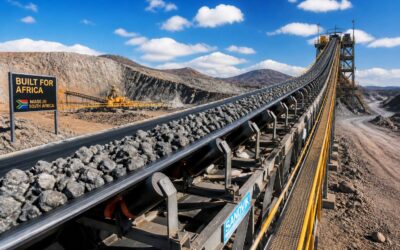
Across the harsh landscapes of South African mining operations, one piece of machinery reigns supreme. It is the tireless circulatory system that keeps the industry’s heart beating. When we talk about the conveyor belt in mining, we are discussing far more than a simple rubber loop. It is a sophisticated engineering marvel designed to transport massive tonnages over incredible distances, often spanning kilometers of rugged terrain.
The primary function is straightforward: move extracted ore from the face to the processing plant. Yet, the execution is anything but simple. These systems must withstand abrasive rocks, extreme heat, and the constant punishment of heavy loads. A single failure can halt production for hours, costing millions in lost revenue. Therefore, the design focuses on durability and reliability above all else.
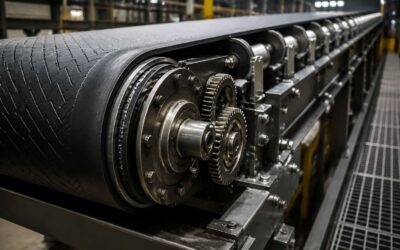
Consider the anatomy of these giants. Several core components work in unison to ensure smooth operation. The belt itself, often reinforced with steel cables, provides the muscle. Idler rollers support the weight and reduce friction. The drive unit, equipped with powerful motors, provides the motion. Finally, the take-up system maintains proper tension to prevent slippage.
But the true genius lies in the ancillary systems that support the main structure. Modern operations rely on advanced sensors to monitor belt health. These systems can detect rips, tracking errors, and bearing failures before they become catastrophic. This proactive approach is vital for maintaining safety standards. Workers, too, play a critical role, performing regular inspections and maintenance that keep the colossal system moving.
The choice of a conveyor belt in mining also directly impacts operational efficiency. A well-selected belt reduces energy consumption and minimizes material spillage. This efficiency translates into a lower cost per ton, which is the ultimate metric for any mining enterprise. It is a silent partner in profitability, working continuously to deliver value.
Ultimately, the conveyor belt in mining represents the bridge between raw potential and finished product. Without it, the modern mining landscape would grind to a halt. It is a testament to human ingenuity, turning a simple concept into a complex, essential tool that powers economies and builds our world.
Engineering Reliable Material Transport Systems
A single conveyor belt in mining operations can move over 10,000 tons of ore every hour, often running for days without a pause. This machinery is the beating heart of modern extraction, transforming brutal, chaotic rock into a measured, purposeful stream of value. The engineering demands constant attention, balancing friction, impact, and load.
We must respect the brutal environment they operate in. Every idler, frame, and splice experiences punishing fatigue. When you design for longevity, you consider the entire system. The system includes:
– Belt carcass and cover grade selection
– Idler spacing and transition zones
– Dust suppression and material containment
– Drive system power and braking response
A failure in any single component creates a cascade of costly delays. You need to stay ahead of wear and tear to keep the mineral economy moving. Ultimately, the conveyor belt in mining is not a simple mechanical part; it is a statement of intent about how we value both production targets and the safety of the people who maintain them.
Safety Protocols and Risk Mitigation
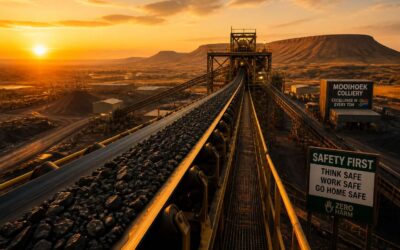
The combined length of all conveyor belt systems in South Africa’s mining sector could stretch from Johannesburg to Durban and back. That is a massive amount of infrastructure moving massive amounts of ore. Yet, beneath these mechanical workhorses lies the constant threat of entanglement, pinch points, and airborne dust. For the men and women working alongside them, the difference between a productive shift and a catastrophe often comes down to the discipline of the crew and the integrity of the machinery.
Understanding the specific physics of your site is the first defence. A belt running at three metres per second carries immense kinetic energy, and a standard emergency stop won’t halt that momentum instantly. This is why proactive engineering is paramount. We have shifted our focus in recent years from reactive patching to predicting failures before they occur, using thermal imaging and vibration analysis to spot hot bearings or misaligned pulleys while the system is still running. It is a silent, constant vigilance that prevents the sudden, violent stop.
To truly build a culture of safety, we must look past the hardware and focus on the human element. It’s not enough to simply hand out a laminated checklist. We ensure the operational protocols are as robust as the steel frame holding the idlers. Consider these often-overlooked safeguards that we implement across our operations:
1. Lockout/Tagout Rituals: We mandate a physical verification process where the operator and the maintenance crew both apply their own locks to the isolation point. This creates a literal “two-man rule” that guarantees the belt cannot be energised while someone is in the danger zone.
2. Stopping Distance Audits: We calculate the actual stopping distance for every load condition on the conveyor belt in mining operations. If the belt takes too long to coast down due to a heavy load or a faulty brake, we adjust the trip switches or add braking force.
3. Dust Suppression Tactics: We use foam systems rather than simple water sprays to capture respirable silica at the transfer points. This keeps the air clear, protecting lungs and maintaining visibility for the operators monitoring the line.
Ultimately, the most effective safety measure is a vigilant operator who knows the sound of a properly tracking belt. The low rumble of a healthy system is a sound of confidence. We encourage our teams to stop the asset immediately if they feel a vibration is off, even if it means losing a few minutes of production. That small hesitation protects the most valuable asset we have: the people who keep the mineral wealth flowing.
Optimizing Operational Efficiency and Sustainability
A conveyor belt in mining is the silent heart of the entire operation, pumping millions of tons of material across vast distances. In the South African highveld, where the geology is unforgiving and the distances are brutal, the margin between profit and loss is measured in seconds of downtime. Every hour a belt sits idle is an hour of lost production that cannot be recovered, forcing managers to make split-second decisions that affect the bottom line.
Optimizing this critical artery requires more than just replacing worn components; it demands a shift in how we perceive the entire material handling system. Our teams on the ground are moving from reactive firefighting to predictive, data-driven strategies. We are installing sensors that monitor belt sway, temperature, and splice integrity in real-time, allowing us to pinpoint a potential failure before it cascades into a catastrophic, multi-day shutdown.
– Load point engineering: Chutes and transfer points are redesigned to minimize impact and spillage, reducing wear on the belt surface.
– Idler alignment: Precise alignment reduces friction and energy consumption, which is critical under Eskom’s load-shedding constraints.
– Lubrication protocols: Automated lubrication systems ensure that every roller operates at peak efficiency, even in dusty conditions.
This focus on operational efficiency directly drives sustainability. A smoother-running conveyor belt in mining consumes less power, emits fewer particulates, and extends the life of the belt itself, which is a significant capital asset. We are seeing operations reduce their energy draw by up to 15% simply by addressing tracking issues. It is a compelling narrative for the local community too, as a reliable operation means consistent employment and less environmental impact. We must move past the old mentality of running a belt until it breaks; the future lies in meticulous, intelligent stewardship of every meter of that rubber and steel. The result is a leaner, greener, and more profitable mining sector for the entire region.
0 Comments