
Exploring Conveyor Belt Options Available in South Africa
Rubber Conveyor Belts and Their Industrial Applications
Every mine manager in South Africa has a story about a belt that gave up on a Friday afternoon. Rubber conveyor belts carry the nation’s wealth, yet they are the least glamorous line item on a procurement sheet. Those seeking a conveyor belt for sale south africa must ask whether they are buying for today or for the next five years.
The industrial applications are deceptively varied. What works for a gold mine’s abrasive ore will not suit a citrus packhouse moving fresh fruit. The rubber compound, carcass strength, and cover thickness all depend on your material.
Consider your site conditions:
- High impact loading calls for a thick, impact-resistant cover
- Steep inclines require chevron patterns to prevent rollback
- Constant sun exposure demands UV-stabilised rubber
In my experience, a conveyor belt for sale south africa that suits your application reduces splices, repairs, and unplanned stops.
Steel Cord and Reinforced Belts for Heavy-Duty Operations
Steel cord belts carry what fabric cannot. Their carcasses hold parallel steel filaments, each one fused into the rubber, granting strength that spans kilometres without stretch. A conveyor belt for sale south africa with this composition hauls deep-level gold, open-cast coal, and iron ore across punishing terrain.
Reinforced belts adopt a different structure. Multiple plies of woven polyester and nylon laminate under heat and pressure, flexing around small pulleys and costing less per metre.
Consider the available options:
- The maximum tension your conveyor imposes
- The bend radius your pulley arrangement demands
- The splice skills your maintenance crew possesses
Site conditions, not preferences, determine the winner. A correctly selected conveyor belt for sale south africa performs long past the date when other machinery fails.
PVC and PU Belts for Food-Grade and Sanitary Environments
Food processing plants in South Africa demand surfaces that tolerate daily washdowns and harsh cleaning chemicals. PVC and PU belts answer that call with smooth, nonporous surfaces that resist bacterial growth. A conveyor belt for sale south africa with these materials keeps poultry, dairy, and packaged goods moving without contaminating product.
Polyurethane handles oily meats and greasy environments where PVC would swell and delaminate. PVC, by contrast, offers better abrasion resistance at a lower price point. Both accept heat welding for seamless splices, eliminating crevices where pathogens hide. I have watched plant managers switch from fabric belts to these hygienic alternatives and immediately reduce downtime!
The belt construction matters as much as the material:
- The base weave determines flexibility and tracking stability.
- The coating thickness affects wear life and chemical resistance.
- The splice method influences cleanability and tensile strength.
Buyers seeking a conveyor belt for sale south africa for food lines should test samples against their own cleaning chemicals before committing to a full installation.
Chevron and Cleated Belts for Inclined Material Handling
Gravity wins on any incline without the right belt surface. Chevron belts use V-shaped profiles that grip loose materials like maize, aggregate, and fertilizer. Cleated belts go further, with raised barriers that cradle individual loads on steep gradients. I have watched operations in Mpumalanga recover lost tonnage overnight after switching to these profiles!
Pattern spacing matters as much as profile height. Wide chevrons suit fine grains, while tall cleats handle rock and rubble. Matching the profile to your material density prevents premature wear.
Some suppliers stock chevron and cleated belting for local conditions. A conveyor belt for sale south africa with these profiles should match your existing trough angle and pulley diameters. Vulcanised splicing keeps the belt seamless on the incline.
Key Industries Driving Demand in the South African Market
Mining and Mineral Processing Operations
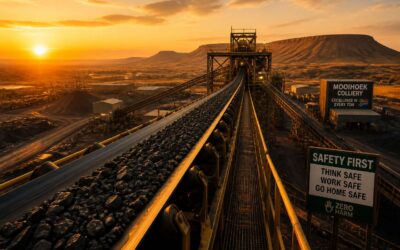
South African gold mines operate at depths exceeding three kilometres. Hauling ore from that depth requires conveyor systems that function without interruption. The machinery between the rock face and the processing plant is not glamorous, but it carries the production burden.
Mineral processing operations crush, grind, and classify material at volumes that test every component. Each stage demands robust material handling. This is where a conveyor belt for sale south africa becomes a procurement decision with real consequences. A belt that cannot handle abrasive ore costs shifts, not just rand.
- Platinum group metals from the Bushveld Complex
- Gold from the Witwatersrand basin
- Iron ore from the Northern Cape
These operations move millions of tons annually. They share one requirement: reliable belting. When maintenance managers evaluate a conveyor belt for sale south africa, they are not buying accessories. They are securing the equipment that determines whether the plant runs or stalls.
Agriculture and Agro-Processing Facilities
The Western Cape’s orchards whisper a quiet truth about the South African harvest. Each plum, peach, and apple must travel from the sorting table to the packing line without bruising, without delay. That journey depends on belting that can handle delicate produce at volume. When an agro-processor searches for a conveyor belt for sale south africa, the inquiry is rarely about the belt itself. It is about preserving the texture and shelf life of goods that may ship to Rotterdam or Dubai within days.
Maize silos in the Free State present a different kind of demand. Here, the product is abrasive, heavy, and relentless. Bucket elevators and field conveyors must contend with husk, dust, and sharp kernels. A belt that wears unevenly creates tracking issues. That slows the entire intake operation during a season when time is measured against rainfall and market prices. These facilities look for a conveyor belt for sale south africa with carcass strength and cover thickness suited to grain handling, not a generic solution.
Agro-processing facilities also handle citrus, avocados, and nuts through multiple stages. Consider the sorting lines where these items move over rollers and through washing tunnels. The belting needs to repel moisture, resist oils, and remain flexible in changing temperatures. This is the quiet work of the industry. It rarely makes headlines, yet it keeps South Africa’s export tables full. Reliable belting here is not a preference. It is the difference between a shipment that arrives intact and one that fails overseas inspection.
Manufacturing and Assembly Lines
Inside South African factories, the conveyor belt is the quiet backbone of the assembly line. Automotive plants in Gauteng and the Eastern Cape rely on precise, synchronized movement. A single stoppage halts the chassis line, costing thousands per minute. These operations don’t buy on price alone; they invest in belting that delivers repeatable performance. When a plant manager searches for a conveyor belt for sale south africa, they need durable splicing and low-stretch characteristics to keep robots and welders fed without interruption.
Assembly lines for appliances, electronics, and building materials carry their own challenges. Components are small, fast-moving, and often awkwardly shaped. The belt must handle rapid acceleration and deceleration without product slip. The work is repetitive, but the belting is anything but simple.
A reliable system here typically includes:
– High-friction covers for incline transfers
– Anti-static compounds for sensitive electronics
– Reinforced edges to resist impact from dropped parts
A belt that drifts mid-shift throws timing off. Poor tracking creates misaligned product, jams, and downtime. For these manufacturers, a conveyor belt for sale south africa is judged on one thing: dependability. They need belting that holds its path under load, keeps pace with automated machinery, and survives the daily grind. It is about keeping the line moving, plain and simple.
Logistics, Warehousing, and Distribution Centres
E-commerce in South Africa grew by 40% in the last two years! That surge puts distribution centres under pressure. Every parcel must move from dock to delivery vehicle without a snag. The conveyor belt carries packages through scanning tunnels, past automated diverters, and into waiting trailers. When maintenance teams search for a conveyor belt for sale south africa, they are often chasing a spare for a high-speed slider bed or a worn roller.
Timing is everything. A meter of belt slipping can misalign a barcode scanner, and then the whole sortation grid loses its rhythm. The best installations use modular belting with quick-release lacing. It allows crews to swap a damaged section in under an hour. For operations running double shifts, that flexibility is worth more than raw tensile strength. A reliable conveyor belt for sale south africa needs to match the original compound, or tracking issues appear within days.
Critical Factors to Evaluate Before Making a Purchase
Load Capacity and Belt Width Requirements
Load capacity and belt width are the first numbers to verify when you see a conveyor belt for sale south africa. A belt rated for 500 tonnes per hour will not survive a peak of 900, even if the width looks sufficient. The tension rating must match the weight of material resting on each metre of the belt, and the width must correspond to the lump size travelling down the line.
These parameters often get overlooked during price negotiations:
- Maximum lump size, which should not exceed one third of the belt width.
- Peak loads at full production, because averages hide the extremes that cause drive slippage.
- Impact ratings at transfer chutes.
Running a wider belt at lower speed often costs less in maintenance than running a narrow belt fast. I have watched operations in Gauteng replace undersized belts twice in one season, and the downtime alone exceeded the price of the correct specification.
Material Composition and Environmental Resistance
Every conveyor belt for sale south africa faces a silent enemy: the environment. Highveld UV can rob a rubber cover of its elasticity within eighteen months. I have watched belts crack like dry riverbeds, not because the load was too heavy, but because the material was never rated for sunlight.
When you evaluate a conveyor belt for sale south africa, material composition dictates survival. Natural rubber handles abrasion well but degrades under ozone and heat. Synthetic blends, such as SBR and EPDM, resist UV, oil, and chemical attack. The cover grade must match your site conditions: corrosive dust in a fertiliser plant or the heat of a smelter.
- Operating temperature range, because underground reef and opencast sun differ.
- Oil and grease resistance, critical near lubrication points.
- Fire-retardant grades, mandatory in gassy collieries.
Evaluate these against real site conditions before committing. The cheapest belt in the yard costs double when it perishes prematurely.
Belt Speed, Throughput, and Operational Efficiency
A conveyor running at 4.5 metres per second moves 800 tonnes of material per hour. Increase that speed to 5.2 and the throughput rises by 15%, but the dynamic load on every idler increases by nearly 30%. That trade-off rarely appears in a brochure.
When I evaluate a conveyor belt for sale south africa, I check the speed rating against the actual drive configuration. A belt designed for 3 metres per second cannot handle the acceleration torque of a start-up at 4 metres per second. The result is slippage, heat buildup, and premature cover wear.
These speed-related factors deserve attention:
- Idler bearing life at continuous operating RPM
- Belt sag and material bounce between idler sets
- Skirt seal pressure and dust control effectiveness
Operational efficiency depends on matching belt speed to the material characteristics. Fines fluidize at high speeds, while coarse rock demands slower, steadier movement. Throughput is the outcome of this balance, not the cause of it.
Durability, Wear Life, and Replacement Frequency
When comparing a conveyor belt for sale south africa, the purchase price is the least important number. The real cost sits in wear life and replacement frequency. A belt failing at 18 months instead of 36 doubles labour costs. I have seen operations replace belts three times in a year because they bought on price.
The carcass construction determines durability. A polyester nylon carcass handles impact well but stretches under tension. A steel cord belt resists elongation but costs more and requires careful splicing. Cover rubber thickness matters. A 4mm cover on abrasive ore wears through faster than an 8mm cover. Most conveyor belt for sale south africa listings focus on width and price, not wear data.
I check these factors:
- Cover gauge at the wear points
- Splice quality, where most failures start
- The manufacturer’s track record in similar applications
Replacement frequency is a maintenance plan, not an accident.
Compliance with South African Safety and Quality Standards
In South Africa, a conveyor belt that fails a safety audit is worse than no belt at all. The Mine Health and Safety Act and SANS 971 set fire retardant benchmarks that underground operations must meet. I have watched imported rolls arrive with glossy certificates, then crumble under a simple flame test.
Before considering any conveyor belt for sale south africa, verify these items:
- SANS 971 compliance with a matching batch certificate
- An SABS mark or accredited third party test report
- Documented approvals for underground and surface duty
South African quality standards are not bureaucracy. They exist because a smouldering carcass in a tunnel can end lives. Insist on batch traceability from the supplier and check the manufacturer’s history with local inspectors. A conveyor belt for sale south africa with proper certification protects your team and your production schedule.
Understanding Pricing Structures and Total Cost of Ownership
Cost Per Meter and Volume-Based Discounts
Upfront pricing never tells the whole story. When you evaluate a conveyor belt for sale south africa, the real financial picture emerges from total cost of ownership. This calculation includes the purchase price per meter, installation, downtime, maintenance, and energy consumption over the belt’s lifespan. A low cost per meter can trap you in a cycle of premature failures and repeated replacements.
Volume-based discounts complicate the decision further. Buying extra meters to unlock a lower unit rate works only when your warehouse can hold the stock and your operations will actually consume it before the rubber degrades. Consider these variables when comparing quotes:
- Delivery lead times affect production planning.
- Splice kits and fasteners add hidden costs.
- Import duties and VAT vary by supplier.
- Technical support and warranty conditions differ.
Ask suppliers to itemise every charge, because the cheapest quote often hides the true expenditure.
Local Manufacturing Versus Imported Options
The true expenditure of a conveyor belt for sale south africa reveals itself slowly, after the invoice is settled. Local manufacturing offers proximity, shorter delivery routes, and a supplier who answers when the line goes quiet. Imported options present a lower initial figure, yet freight charges, port delays, and currency shifts accumulate in the shadows of the deal. The total cost of ownership stretches beyond the quoted price:
- Local stock minimises downtime and emergency freight expenses.
- Imported belts demand longer lead times and currency forecasting.
- Warranty enforcement fades when the manufacturer sits across an ocean.
Weigh these factors with a careful hand. I have seen operations crippled by a single delayed shipment. The distant belt may fail when production demands it most, while the local one, though costlier at first, stays within reach. Every quote carries its own silence.
Installation, Splicing, and Commissioning Expenses
The quoted price for a conveyor belt for sale south africa rarely tells the full story. Pricing structures typically separate the belt itself from the work required to make it function. A low per meter figure can mask substantial installation fees that appear later.
Splicing demands trained technicians and the right vulcanising equipment. A poor splice shortens belt life and causes tracking issues. Commissioning expenses include alignment, tensioning, and test runs. These steps require time and labour that some quotes omit entirely.
- A quote that excludes endless splicing shifts that cost into the installation phase.
- Site visits and alignment checks appear as separate line items.
- Commissioning procedures vary in scope between suppliers.
Compare full installation packages when evaluating a conveyor belt for sale south africa. The difference between quotes often reflects what was left out.
Ongoing Maintenance and Spare Part Availability
Pricing a conveyor belt for sale south africa demands a longer lens than the invoice suggests. The total cost of ownership stretches across years of operation, where maintenance and spare parts quietly shape the real expense. I have seen operations celebrate a bargain purchase only to bleed money through unplanned stoppages.
Ongoing maintenance creates the largest variable cost. Belts wear unevenly, idlers fail, and cleaning systems demand attention. The true question is how quickly you can source replacements when something breaks.
- Verify local stock levels for pulleys, idlers, and belt fasteners
- Ask whether the supplier carries spares for the specific belt model
- Confirm average lead times for emergency orders
A conveyor belt for sale south africa backed by robust spare part availability protects your operation from extended downtime. That reliability transforms a modest quote into real value, while a cheap belt with poor support becomes the most expensive purchase you will make.
Selecting a Reliable Supplier and Ensuring Seamless Sourcing
Verifying Certifications and Industry Accreditations
When you’re hunting for a conveyor belt for sale south africa, the difference between a supplier who delivers and one who vanishes often comes down to their paperwork. A glossy brochure tells you little; a valid SABS mark or ISO 9001 certificate tells you more. Before committing, verify that the supplier’s accreditations are current and actually cover the specific belt type you need. Key certifications to look for include:
- SABS 1313 for rubber conveyor belts
- ISO 14890 for general purpose belts
- DIN 22102 for textile conveyor belts
Operators sometimes skip this step and later inherit a splicing nightmare. Regardless of where you find a conveyor belt for sale south africa, the supplier’s credentials matter more than the initial quote. A reliable supplier happily furnishes test reports, traceability documentation, and proof of local service capacity. References from nearby mines or plants are typically available. If a supplier hesitates on any of these, that is your answer. The right partner makes seamless sourcing feel almost boring, which is exactly what you want.
Assessing After-Sales Support and Technical Expertise
Picture your new conveyor belt for sale south africa arriving on schedule, only to fail three weeks later with no one to call. That scenario plays out more often than industry insiders admit. In my experience, after-sales support is what separates a real supplier from a glorified shipping agent.
Ask direct questions about response times and technical expertise. A reliable team offers on-site assistance, emergency callouts, and splicing services. They also stock spare parts locally. If they hesitate on any of these, keep searching.
- Who answers the phone after hours?
- Do they carry replacement components in-country?
- Can their technicians diagnose problems remotely?
Technical expertise reveals itself in the details. A supplier who understands belt tracking, pulley lagging, and tensioning systems prevents costly downtime. Your conveyor belt for sale south africa is only as valuable as the support behind it, so choose someone who answers when it matters.
Evaluating Lead Times and Stock Availability
Selecting a supplier of conveyor belt for sale south africa demands a certain ruthlessness. The glossy brochure means nothing when a stalled line waits for steel and rubber. I have walked warehouses that looked impressive from the road, then found nothing behind the facade but dust and empty pallets.
Before any commitment, interrogate their inventory. Ask precise questions:
- What is the actual lead time from order to dispatch?
- Which belt widths and grades are stocked locally?
- Can they supply replacement stock within days, not months?
Lead times reveal a supplier’s operations. A supplier who answers with specifics holds a real supply chain. One who answers with vagueness carries your risk in their silence. The finest conveyor belt for sale south africa is worthless if it cannot reach your floor before your production stalls.
Requesting Samples and Conducting On-Site Trials
Any conveyor belt for sale south africa can look good in a brochure. I ask for a physical sample. Not a photograph, not a PDF, and not a promise from an account manager who has never stood on a factory floor.
Request a length of the actual belt you plan to buy. Check the cover thickness with a calliper. Flex the carcass until your hands complain! If the supplier hesitates, that hesitation is your answer.
I rely on three questions:
- Does the supplier offer a sample cut from current stock?
- Can a technician splice the trial belt on-site?
- Is the trial window long enough for several full shifts?
On-site trials are proof. A conveyor belt for sale south africa might perform well in a climate-controlled warehouse, but your site has heat, dust, and spilled material. Only a trial reveals how the belt handles your load, your pulleys, and your operators.
0 Comments