
Core Components and Configuration
Belt Structure and Material Selection
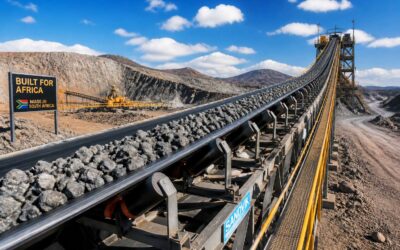
The average mining conveyor belt system moves thousands of tons per hour, yet one faulty idler can halt production. I’ve seen that happen underground, and it’s brutal. South Africa’s demanding environments require precise configurations. Core components, such as idlers, pulleys, and take-up units, must align with accuracy. A misaligned roller accelerates wear on the belt carcass, resulting in costly downtime.
Belt structure and material selection determine operational longevity. The carcass, whether fabric or steel cord, carries the load, while covers protect against abrasion and impact. For hard rock, rubber compounds with high abrasion resistance are essential. In gassy mines, fire-resistant covers are mandatory.
Consider these material options:
– Steel cord for long, high-tension hauls
– PVC for smaller, lighter duty systems
– Solid woven for impact-heavy loading zones
Each mining conveyor belt system requires site-specific tuning, from idler spacing to belt thickness, ensuring reliable operation.
Drive Systems and Pulleys
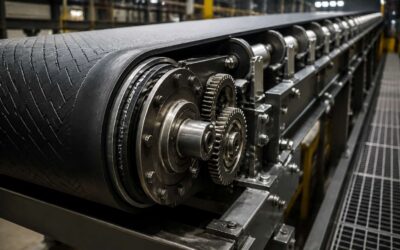
The pulleys and drive assemblies demand exacting alignment in any mining conveyor belt system. A single lagged drive pulley at the head end transfers torque from the motor to the belt, while snub pulleys increase wrap angle for grip. Bend pulleys redirect the belt path, and take-up pulleys maintain tension. Each rotation carries responsibility.
In my years across South African operations, I have watched a misaligned drive pulley send ripples through the entire structure. The belt drifts, edges fray, and frames groan. That is why configuration outweighs brute strength. Matching pulley diameters to belt speed reduces flex fatigue, and proper drive sizing prevents stall under peak loads.
- Lagged pulleys for grip in wet conditions
- Ceramic and rubber variants for abrasive dust
- Pneumatic or hydraulic take-up units for dynamic tension
Every component must synchronize. A sluggish take-up causes slack, and slack invites catastrophic damage. The mining conveyor belt system lives or dies by these pulleys, so treat them with the precision they demand.
Idlers and Support Frames
Idlers carry the load, literally. In a mining conveyor belt system, these rollers form the continuous support structure that keeps the belt from sagging under tonnes of ore. Spacing determines the catenary curve between supports. Too wide, and the belt flexes excessively. Too narrow, and you waste steel and energy.
South African operations face a particular enemy: fine dust that cakes onto idler surfaces. A seized idler becomes a stationary scraper, wearing through the belt carcass from beneath. The support frames themselves must resist torsion while maintaining the trough angle that keeps material centred. Any mining conveyor belt system depends on this structural rigidity.
Frame misalignment compounds over distance. A few millimetres of offset at one station becomes centimetres of belt wander at the tail end. Regular inspection of idler rotation and frame squareness prevents these progressive failures.
Loading and Transfer Points
At a transfer point, the mining conveyor belt system faces its sternest test. Material falls, impacts, and must settle into a centralised stream. Chute geometry decides between a neat column and scattered ore. Skirtboarding contains the load, yet misaligned skirting invites spillage and belt wear. Impact beds soften the blow; without them, frames buckle and the belt bruises.
The typical configuration at a loading station follows a simple sequence:
- Ore drops from the chute.
- The impact bed absorbs energy.
- Skirtboards funnel material into the trough.
Every angle matters. Off-centre loading causes belt wander and fugitive dust. South African operations add dust extraction hoods, as airborne fines in confined spaces create health and cleaning problems. Adequate headroom and rockbox liners reduce degradation and keep the belt stable. The transfer point decides whether the mining conveyor belt system earns its reputation or loses it.
Operational Performance and Reliability
Load Capacity and Throughput Optimization
Reliability in a South African mine is measured in tons per day, not in promises. A single stalled section can ripple through the entire plant, and the cost of downtime often dwarfs the price of the parts. I have watched operators chase minor misalignments while ignoring the accumulating problems under their feet.
- Monitor belt sag at load zones to detect hidden spillage issues early.
- Track motor current draw against historical baselines for each shift.
Load capacity depends on several variables. Throughput optimization demands that you match belt speed to material density, not the other way around. The mining conveyor belt system rewards those who treat it as a measured process. Every ton that moves without friction is a ton earned, and every error carries a visible price.
Belt Tracking and Alignment Procedures
The mine breathes through its arteries of rubber and steel, yet nothing disrupts that pulse like a belt that will not run true. Misalignment here is a breed of sabotage, silent and cumulative. It robs the edges, scrapes the structure, and eventually finds its voice in a catastrophic tear. The mining conveyor belt system demands a kind of paranoia, a ritual of measurement that begins before the first ton is loaded.
True tracking begins with observation, not adjustment. You must watch the belt’s behavior under full load, not in the quiet moments.
1. Inspect idler frames for level across the transverse axis.
2. Check for build-up on return rollers that forces directional drift.
3. Verify that the splice is square because a skewed splice is a death sentence.
4. Listen for the thrub-thrub of a damaged edge striking a skirt.
A technician who adjusts a tracking roller on a whim is merely treating the symptom. The structure must be square, the load must be centered, and the tension must be consistent. I have seen belts correct themselves when the operators simply cleared the spillage that was wedging the idlers into a false position. The machinery wants to move forward. It is our indolence that turns its path crooked. Discipline in the monthly alignment audit is the cheapest insurance you will ever buy, and the first step towards surviving the shift.
Common Wear Patterns and Failure Modes
Every hour of uptime depends on the small failures that go unnoticed. In a mining conveyor belt system, wear patterns appear before any other symptom. Edge damage shows up long before the belt stops, but most operators only notice when the splice begins to fray. Carcass fatigue is another matter. It develops as flexing cracks at the trough of the idler path and spreads quietly through the plies. Once those cracks reach the top cover, the belt is already beyond repair.
Common failure modes repeat themselves in predictable ways:
- Top cover erosion from material trapped between the belt and the pulley face.
- Fastener rupture at the splice, usually from poor vulcanisation.
- Impact damage from oversized lumps at the loading point.
Reliability, in practice, is the discipline of identifying those signs early. A belt that lasts five years instead of two is not luck. It comes from regular inspections and the willingness to stop the shift for a repair that still looks optional.
Advanced Monitoring Technologies
Most mines only discover belt damage when a splice gives way at 2 a.m. That costs more than a shift; it costs the week. Smart technologies turn that panic into data you can read from a phone. Remote monitoring now watches the mining conveyor belt system for heat, vibration, and misalignment in real time, flagging issues before your operators even hear the strange noise.
At the heart of this is condition monitoring, which scrutinises every pulley bearing and motor winding. It checks for specific signatures of wear, like infrared hotspots or acoustic anomalies. A modern setup is a digital taskmaster:
– Vibration analysis on drive and take-up pulleys..
– Ultrasonic sensors that catch early bearing fatigue.
– Laser profiling of belt thickness at the load zone.
These tools remove guesswork. The result is uptime that follows a schedule you dictate, not one forced by a snapped fastener. And the whole system feeds into software that predicts remaining service life, so you can plan a replacement when the calendar suits you. For a mining conveyor belt system, this is the difference between managing risk and being managed by it.
Strategies for Continuous Operation
Operational performance hinges on discipline. For a mining conveyor belt system, reliability means anticipating wear before it causes a stoppage. We schedule maintenance in narrow windows, using shift handovers to inspect critical components. Tracking mean time between failures gives us a number we can improve, not a guess.
Consider these tactics for continuous operation:
- Rotate standby equipment weekly to distribute fatigue.
- Standardise repair procedures across all crews.
- Keep a critical spares inventory at the site.
Each step reduces delays between shifts. The result is a production target met without drama. That is the mark of a mature operation.
Safety Protocols and Regulatory Compliance
Fire Suppression and Detection Systems
Fire looms as a constant hazard within any mining conveyor belt system. The friction of moving components, the accumulated dust, the heat of overburdened rollers; all conspire toward ignition. South African regulations demand a layered defense. Detection must precede suppression, and every second carries weight.
Thermal sensors and linear heat detection cables monitor the belt’s length. These feed into automated suppression units, often using water mist or foam. I have seen systems where a single spark triggers a cascade of response before any human could react!
- Infrared scanners at transfer points
- Spark detection with extinguishing zones
- Pressure differential monitors along the structure
Compliance is not a checklist; it is a daily discipline for any mining conveyor belt system. Regular testing of every nozzle, every alarm, every valve prevents catastrophe.
Emergency Stop and Lockout Mechanisms
Operator error accounts for a disproportionate share of conveyor injuries. Emergency stop and lockout mechanisms on a mining conveyor belt system are the final safeguard, demanding more than hardware. They demand trust.
I have seen accessible pull wires, yet empty tagout stations. That gap is a warning that cannot be ignored. A proper lockout sequence is tedious, yet it saves lives!
- Disconnect power
- Apply locks
- Test for zero energy
Regulatory compliance under the Mine Health and Safety Act requires regular drills and audits. Without these mechanisms, every shift carries risk.
Guarding and Access Control Measures
Guarding and access control separate personnel from the kinetic energy of a running conveyor. South African mines face specific requirements under the Mine Health and Safety Act, which mandates physical barriers on every dangerous moving part. A guard that can be removed without a tool is no guard at all, it is a hazard in disguise.
Access control extends beyond fixed barriers. Interlocked gates, proximity sensors, and restricted entry points form a layered defence. Consider what your safeguarding strategy must address:
- Inspection points that require safe, designated access routes
- Maintenance platforms with controlled entry protocols
- Conveyor tunnels with monitored access and egress points
Every mining conveyor belt system demands this layered approach. Regular audits of these measures are not paperwork exercises. They are the difference between a controlled workplace and a preventable accident.
Operator Training and Certification Standards
In South Africa, every conveyor installation operates within a framework of rigorous legal scrutiny. The Mine Health and Safety Act demands more than paper policies. It requires demonstrable competence from every person who touches the machinery. Operator training must move beyond basic induction into scenario based drills that mirror real underground conditions.
- Verification of certifications before shift assignments
- Refresher courses aligned with updated regulations
- Practical assessments on emergency procedures
Certification standards are not static documents. They evolve with incident data and technological advances! A certified operator understands load dynamics, dust suppression, and communication protocols. Regulatory compliance hinges on auditable records, not verbal assurances. For a mining conveyor belt system, safety is a formal obligation between management and workforce.
Industry Compliance and Inspection Guidelines
An unannounced inspector can halt a mining conveyor belt system with a single note in a logbook. South Africa’s Mine Health and Safety Act grants that authority without warning. Every installation must prove ongoing adherence through documented routines, not reactive fixes. In my years visiting operations across the Witbank coalfields, I have seen how inspection guidelines dictate survival.
Statutory compliance goes beyond nominal paperwork. A mining conveyor belt system must demonstrate that safety protocols are followed during every shift. Inspectors verify that risk assessments match actual conditions, that maintenance logs align with certification records, and that deviations are formally explained. The standard is simple: if you cannot show it, you cannot claim it.
Key focal areas for inspectors:
- Operator certification validity against shift rosters
- Incident and near miss reporting timelines
- Statutory inspection schedules and sign offs
A shutdown notice arrives quickly when these records fail the test. Regulatory compliance in South Africa is a continuous process, not an annual exercise.
Dust and Noise Control Solutions
The dust that rises from a mining conveyor belt system is not merely an aesthetic nuisance. In the Mpumalanga highveld, a fine layer of coal dust is a visible admission of inefficiency and a legal liability. I have stood at transfer points where the air shimmers with particulate, while the onsite manager insists the suppression spray is functional. The logbook, however, tells a different story. Statutory compliance under the Mine Health and Safety Act demands that dust control measures are not just fitted, but operationally verified.
Noise, the more insidious companion to dust, often escapes the eye but never the meter. A conveyor running without proper idler lubrication or with worn belt scraper blades produces a decibel signature that can lead to hearing damage and hefty fines. Effective control solutions require more than a single misting nozzle placed at a chute. They require a layered approach that considers the velocity of airflow, the moisture content of the material, and the acoustic properties of the surrounding structure.
A robust strategy integrates several elements:
– Full length skirt sealing to contain fugitive material at loading zones.
– Dual axis belt wipers with drip pans to prevent carryback from drying and becoming airborne.
– Acoustic louvres and lagged pulley shells to dampen high frequency noise at the source.
– Localised extraction systems that capture respirable dust before it leaves the plant footprint.
Quiet, contained operations mean fewer shutdown notices. When the inspector arrives, the silence of a well damped system and the absence of visible dust plumes often speak louder than any documented routine. That is the only proof that matters.
Economic and Environmental Impact
Energy Efficiency Improvements
Every kilowatt consumed by a mining conveyor belt system carries a shadow cost. In South Africa, where electricity tariffs climb relentlessly, the gap between a wasteful and a disciplined operation is measured in millions of rand. Energy efficient motors, regenerative drives, and optimised load control lower that burden. These upgrades reduce operational expenditure and shrink the carbon footprint.
The environmental ledger matters equally. A system moving smoothly consumes less power and fewer replacement parts. For deep level mines, this means fewer emissions per ton hauled.
- Variable speed drives match energy use to actual load
- Precision idler alignment cuts rolling resistance
- Automated load monitoring prevents wasted motion
The mining conveyor belt system that embraces these measures pays down its debt to both the balance sheet and the earth. That is the quiet arithmetic of long term survival.
Total Cost of Ownership Assessment
In South Africa, the true cost of a mining conveyor belt system extends far beyond the initial procurement invoice. Industry studies suggest that the purchase price accounts for a mere fraction of the total expenditure over a decade of operation. The real burden lies in the relentless consumption of electricity, the constant need for maintenance labour, and the silent erosion of components. A conveyor that struggles against misalignment or runs with damaged idlers draws more power and fails sooner. This operational debt accrues quietly, often unnoticed until the shutdowns begin.
The economic ledger is intertwined with environmental accountability. A poorly maintained system burns excess energy, which in turn inflates the carbon tax liability for the operation. Conversely, a disciplined approach to asset management yields direct financial returns. Reducing rolling resistance and optimising load distribution does not just save rand on the energy bill; it extends the lifespan of the belt and reduces the frequency of costly replacements. The environmental impact is measured in lower emissions per ton hauled, a metric that increasingly defines the social license to operate.
When assessing the total cost of ownership, the calculation must include several hidden variables:
– The cost of unplanned downtime, which often exceeds the cost of the failed part itself
– The energy penalty paid for running a system at partial load or with poor alignment
– The logistical expense of emergency parts delivery to remote mine sites
– The labour overhead for emergency repairs versus scheduled maintenance windows
These factors compound over time. A mining conveyor belt system that is efficient on paper can still bleed capital if the site fails to account for these subtle, recurring expenses. The most profitable operations treat the conveyor not as a static piece of machinery, but as a dynamic financial entity that demands constant vigilance. The arithmetic is unforgiving, and the margin for error grows thinner with each passing year of rising tariffs and stricter environmental regulation.
Sustainable Material Handling Practices
The mining conveyor belt system in South Africa carries a quiet responsibility. Sustainable material handling practices are not an abstraction. They are measured in kilowatt hours avoided and in tons of fugitive dust that never enter the air. A belt that runs true demands less from every component. That restraint is the foundation of cost control and environmental stewardship.
When a site reduces spillage, it reclaims valuable ore and cuts clearing labour. When idlers roll freely, the drag lessens and power draw falls. These adjustments compound into meaningful reductions in carbon liability.
Consider the relevant practices:
1. Real-time load monitoring to prevent overloading and reduce belt wear
2. Regular tension audits to eliminate slippage and energy waste
3. Dust suppression systems that recover material instead of losing it
Each element binds the financial ledger to the environmental record. The mining conveyor belt system becomes a tool for profit and accountability, provided the operation respects its mechanics. Sustainable practice is not an ideal. It is arithmetic applied with discipline.
Waste Reduction and Recycling Techniques
South African mines discard millions of rand each year through spillage and inefficient transfer. A single overlooked idler can cascade tonnes of ore onto the floor. That material becomes waste, and waste carries both a cleanup cost and an environmental penalty. The mining conveyor belt system offers a direct route to reverse this loss, and the arithmetic is simple. Recycling techniques start at the belt surface:
- Scraper systems redirect carryback into the main material flow
- Magnetic separators extract ferrous debris before it damages downstream equipment
- Recirculation conveyors feed recovered fines back into the process
The economic effect is immediate. Less ore is lost, and less labour is spent shovelling. The environmental effect is equally tangible. Every tonne diverted from the ground under the belt reduces dust and soil contamination. For any operation running a mining conveyor belt system, waste reduction is a design principle with measurable returns.
Carbon Footprint Reduction Strategies
Haul trucks burn diesel at a rate that makes accountants wince and sustainability officers reach for antacids. A mining conveyor belt system swaps liquid fuel for electric power, but the carbon accounting does not close there. The belt itself carries embodied carbon, from steel cord to rubber cover, and every kilometre of overland transport adds to that bill.
The sharpest carbon reductions hide in unglamorous territory:
- Splicing a worn belt instead of replacing it saves the manufacturing carbon of a full carcass
- Operating at correct tension reduces slip, which is energy converted into heat and wear
- Matching belt width to material profile prevents recirculation loads that consume power without moving new ore
For South African mines, carbon credits reward auditable reductions. A mining conveyor belt system makes those reductions measurable, and the measurement itself becomes the strategy.
Future Innovations and Industry Trends
Smart Conveyor Technologies and IoT Integration
In the mines of South Africa, the future of a mining conveyor belt system is not written in steel or splices, but in the silent language of data. These machines are shedding their industrial silence, becoming articulate networks that whisper their own maintenance schedules. The shift from reactive repair to predictive intervention hinges on a layer of digital muscle wrapped around the mechanical bones of the operation.
This evolution is powered by a constellation of sensors that monitor vibration, thermal variance, and belt velocity. A system that can feel a bearing seizing before it locks, or sense a splice weakening a kilometer away, transforms the operational strategy. Mine managers are no longer guessing; they are reading a live health report of the entire line.
The Internet of Things (IoT) stitches these sensors into a coherent narrative. Instead of isolated alarms, the system offers a complete picture of material flow and component stress.
– Real time load distribution analysis across the entire network
– Automated lubrication cycles triggered by actual usage, not arbitrary schedules
– Geolocated fault detection that pinpoints a problem to the exact bracket or return roller
These digital threads promise to close the gap between the control room and the dusty reality of the field.
For South African operations, battling deep-level heat and variable power supply, smart conveyors offer a form of resilience. They adapt to voltage sags without catastrophic shutdowns. They adjust throughput speeds based on upstream feed rates, preventing bottlenecks and overflow. The intelligence lies in the connectivity. A conveyor that communicates its wear thresholds can be serviced during planned downtime, not forced into emergency stoppages that echo through the entire value chain. This is the quiet revolution. The ore moves, but the intelligence now moves faster, ensuring the physical system never stands still.
Modular and Mobile Transport Solutions
At a platinum mine on the Bushveld Complex, a section of the mining conveyor belt system is being repositioned forty metres closer to the advancing pit face. Fixed installations are giving way to modular architectures.
Modular components break down into transportable cassettes and redeploy without civil works. We have watched stations move on crawler tracks and transfer points telescope. The economics of open pit mining shift when a belt can be moved overnight.
Three trends are accelerating this change.
- Mobile crushers feeding short conveyors at the advancing face
- Self-advancing tail pieces that extend the line automatically
- Reconfigurable drives that permit rapid route changes
For South African mines, this means a mining conveyor belt system responds to geology as it unfolds, not to a blueprint drawn years earlier.
Digital Twin and Simulation Applications
A digital twin of a mining conveyor belt system is a simulation environment where failure is encouraged. South African engineers rehearse belt slip and pulley misalignment in virtual space before the physical system does. The twin ingests live data and returns forecasts with uncomfortable precision.
The practical use is direct. You learn what happens when a drive pulley loses grip at full load, or when the tail piece advances faster than the belt can track. No gantry climbing required!
- Load surge during a shift change
- Belt speed variance across a reconfigurable drive
- Emergency stop with a full load on the incline
Each simulation feeds back into the mining conveyor belt system as a revised parameter. The model updates itself with every wear pattern and alignment correction. The system learns from problems it never actually experienced. For a country with demanding geological conditions, that is a requirement.
Predictive Maintenance and AI-Driven Analytics
The future of the mining conveyor belt system is not a machine that waits for failure. It is a machine that predicts its own ruin.
Predictive maintenance, powered by AI-driven analytics, shifts the industry from reactive repairs to calculated foresight. Sensors along the idlers and drive units feed continuous data streams into models that flag anomalies before they become catastrophic. For South African operations, where downtime is measured in lost millions, this matters.
Consider the early warning signs:
– Abnormal vibration on a tail pulley
– Current draw spikes in the drive motor
– Temperature drift on a bearing housing
Each signal prompts intervention while the system still runs. The mining conveyor belt system learns its own diagnosis, rehearsing failure in data long before steel feels the strain.
0 Comments