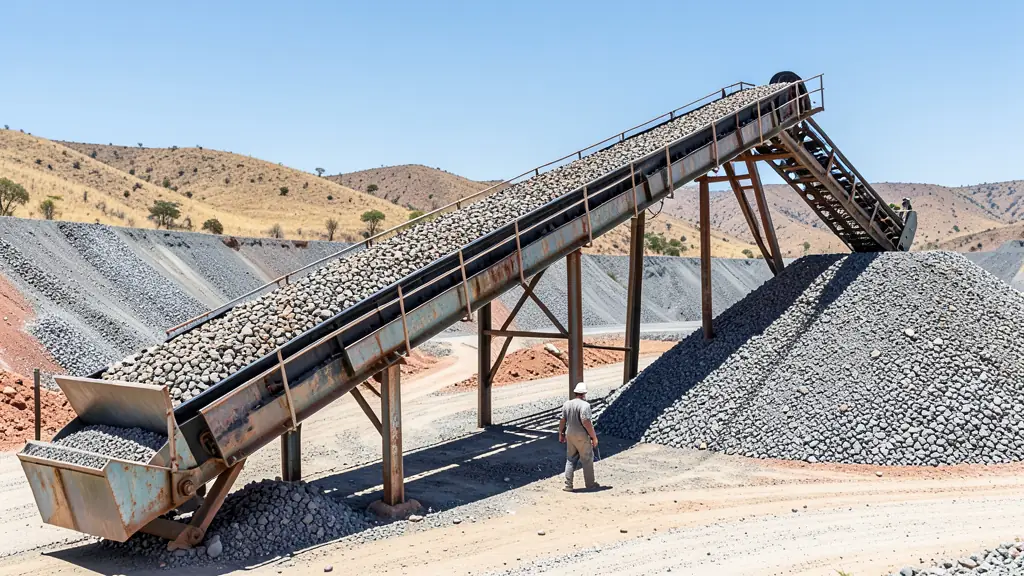
Conveyor systems move bulk material or packed goods from one point to another with less handling and lower cost than trucks. They range from a short feeder to an overland conveyor several kilometres long. ConveyorBelting.co.za is a free quote-request service, not a supplier. Describe your material, tonnage and layout, and we pass your request to independent engineering firms and equipment suppliers who quote directly on belt conveyor systems for sale, design and installation, with no obligation.
Types of conveyor systems
- Belt conveyors: for bulk material such as coal, ore, aggregate and grain
- Roller conveyor systems: for cartons, pallets and unit loads in warehouses
- Mobile and stacker conveyors: track or wheel mounted units for stockpiles and loading
- Modular plastic and PVC lines: for food and light-duty packing
Each type suits different loads, hygiene needs and speeds.
Conveyor design basics
Good conveyor design starts with the material: lump size, bulk density, moisture and abrasiveness. Add the required capacity in tonnes per hour, the length and the lift. These set belt width, speed, troughing angle (commonly 20, 35 or 45 degrees), idler spacing and the drive power. Transfer points, chutes, cleaners, skirts and dust control need as much attention as the belt itself. Allow for future capacity, and for safe access to maintain every part. Stockpile and hopper sizes, weather exposure, dust and noise limits and the foundation conditions on site should all be settled before the supplier finalises the layout.
Components of a belt conveyor
A belt conveyor system has several linked parts: the belt, idlers and frames, head and tail pulleys with lagging, the drive, take-up, chutes, cleaners and skirting, plus safety devices and controls. Quality varies between components, so ask suppliers to state the standards they work to, such as SANS 1313 for idlers. A supplier who quotes for the whole system takes responsibility for how the parts work together. Where you buy parts separately, make sure someone checks that belt, idlers, pulleys and drive are compatible in width, strength and speed.
Buying, hiring and installing
New systems are built to order, while standard or used conveyors may be available from stock. Short-term jobs can suit hired mobile conveyors. Installation covers steelwork, mechanical fitting, electrical work, belt pulling, splicing and commissioning. Ask for a clear scope, a programme, and a safety file, and confirm who supplies spares and training once the conveyor is running. Compare quotes on the same scope, including civil works, electrical supply, guarding and handover documents, so the lowest price is not simply the one that leaves things out.
Comparing conveyor systems quotes
Prices change with rubber and steel costs, the exchange rate and stock levels. When quotes arrive, check:
- Exact specification: width, carcass and strength, cover grade and thickness, or the part number, size and standard.
- Quantity and units: per metre, per roll, per item or per set, and any minimum order or cutting charge.
- Lead time: ex stock, or imported or made to order, and how long that takes.
- Delivery and VAT: transport to site, offloading of heavy rolls, whether VAT is included and how long the price holds.
What to include in your request
- Material, lump size, moisture and tonnes per hour
- Conveying distance, lift and site layout
- Fixed, mobile, new or used system
- Power supply and safety or hygiene requirements
- Site address, deadline and whether installation is included
Frequently asked questions
Do you build or sell conveyor systems?
What information is needed for a conveyor quote?
Can I buy a mobile or used conveyor?
How long does a conveyor system take to deliver?
Conveyor Systems by province
- Conveyor Systems Gauteng
- Conveyor Systems Mpumalanga
- Conveyor Systems North West
- Conveyor Systems Limpopo
- Conveyor Systems Northern Cape
- Conveyor Systems Free State
- Conveyor Systems KwaZulu-Natal
- Conveyor Systems Eastern Cape
- Conveyor Systems Western Cape
Conveyor Systems by city and town
- Conveyor Systems in Johannesburg
- Conveyor Systems in Pretoria
- Conveyor Systems in Germiston
- Conveyor Systems in Boksburg
- Conveyor Systems in Benoni
- Conveyor Systems in Kempton Park
- Conveyor Systems in Springs
- Conveyor Systems in Vanderbijlpark
- Conveyor Systems in Vereeniging
- Conveyor Systems in Carletonville
- Conveyor Systems in Krugersdorp
- Conveyor Systems in eMalahleni (Witbank)
- Conveyor Systems in Middelburg
- Conveyor Systems in Secunda
- Conveyor Systems in Ermelo
- Conveyor Systems in Kriel
- Conveyor Systems in Mbombela (Nelspruit)
- Conveyor Systems in Lydenburg
- Conveyor Systems in Rustenburg
- Conveyor Systems in Brits
- Conveyor Systems in Klerksdorp
- Conveyor Systems in Potchefstroom
- Conveyor Systems in Polokwane
- Conveyor Systems in Lephalale
- Conveyor Systems in Burgersfort
- Conveyor Systems in Phalaborwa
- Conveyor Systems in Mokopane
- Conveyor Systems in Kimberley
- Conveyor Systems in Kathu
- Conveyor Systems in Postmasburg
- Conveyor Systems in Upington
- Conveyor Systems in Springbok
- Conveyor Systems in Bloemfontein
- Conveyor Systems in Welkom
- Conveyor Systems in Sasolburg
- Conveyor Systems in Kroonstad
- Conveyor Systems in Durban
- Conveyor Systems in Pinetown
- Conveyor Systems in Pietermaritzburg
- Conveyor Systems in Richards Bay
- Conveyor Systems in Newcastle
- Conveyor Systems in Empangeni
- Conveyor Systems in Gqeberha (Port Elizabeth)
- Conveyor Systems in Kariega (Uitenhage)
- Conveyor Systems in East London
- Conveyor Systems in Cape Town
- Conveyor Systems in Bellville
- Conveyor Systems in Saldanha
- Conveyor Systems in George
- Conveyor Systems in Worcester