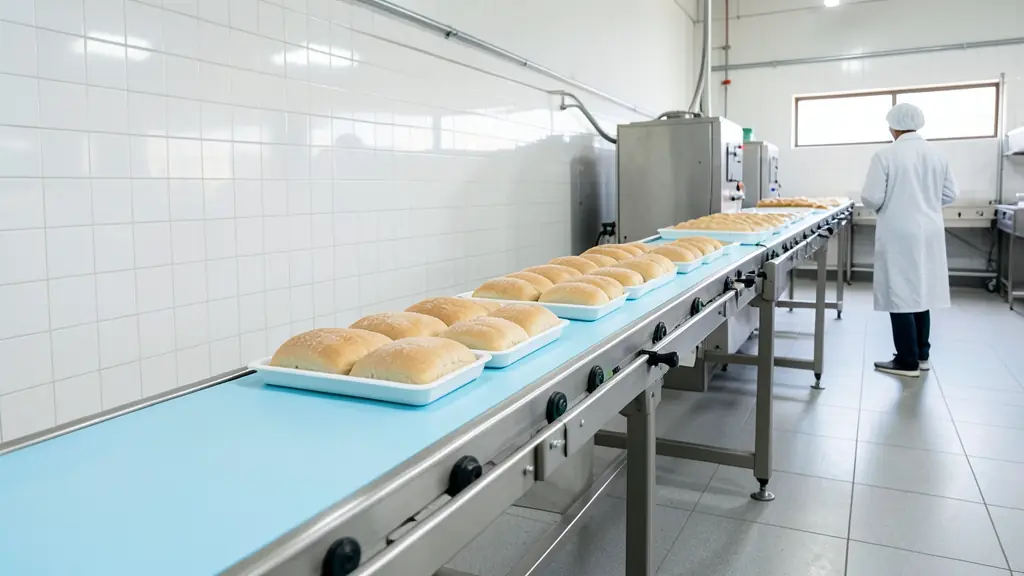
A PVC conveyor belt is the usual choice for light-duty lines: packing, sorting, bakeries, parcels and assembly. Food plants often need a food conveyor belt that is easy to clean and certified for direct contact. ConveyorBelting.co.za is a free quote-request service. Describe your product, line and hygiene needs, and we pass your request to independent suppliers of PVC, PU and modular belting who quote you directly. We do not sell belts ourselves, the request is free and there is no obligation.
What PVC conveyor belt is used for
PVC belts have a polyester fabric carcass with a smooth or patterned PVC cover. They are light, flexible and low in cost. They suit:
- Packing and sorting lines in warehouses and distribution centres
- Bakeries, packhouses and general food handling
- Parcel, baggage and courier conveyors
- Assembly lines and inclined elevating belts with cleats
They are not meant for hot, sharp or heavy bulk material such as ore or rock.
PU and food-grade belts
PU conveyor belts use a polyurethane cover that resists oil and fat and is smooth to clean, so they are common on meat, dairy and bakery lines. Direct-contact belts should carry food-contact approval such as FDA or EU 1935/2004, and many plants also ask for HACCP-friendly designs. White, blue and other colours help to show contamination. Ask for the supplier's compliance certificates before the order is placed. Check that the cleaning chemicals and temperatures used on your line are suitable for the cover you choose.
Modular plastic belts
Modular plastic belts are built from interlocking plastic links driven by sprockets. They suit wet washdown areas, curves, spirals and cold rooms, and damaged sections can be replaced on site without a full splice. Open grid types drain water and allow air flow. They tolerate temperature ranges that fabric belts do not. The supplier can match pitch, material and surface to your line and sprocket arrangement.
Specifying light-duty belting
Give the belt width, length, speed, product weight, temperature and cleaning method. Choose cover, thickness and surface (smooth, textured or cleated) to suit the product. Finger splices or endless joints suit light PVC belts, and the joint must be made to the supplier's procedure. Cost depends on width, thickness, cover type, certification, length, joint type, order size and delivery. A sample piece or a site visit helps confirm the grip, the thickness and the joint before you order the full belt. Order a spare length for the first repair and keep it stored clean and flat, since matching an older belt later can be difficult.
Comparing PVC conveyor belts quotes
Prices change with rubber and steel costs, the exchange rate and stock levels. When quotes arrive, check:
- Exact specification: width, carcass and strength, cover grade and thickness, or the part number, size and standard.
- Quantity and units: per metre, per roll, per item or per set, and any minimum order or cutting charge.
- Lead time: ex stock, or imported or made to order, and how long that takes.
- Delivery and VAT: transport to site, offloading of heavy rolls, whether VAT is included and how long the price holds.
What to include in your request
- Belt width, length and speed
- Product carried, weight and temperature
- Food contact needed, and certificate required
- Surface type, cleats or sidewalls
- Washdown method and joint type
Frequently asked questions
Do you supply PVC conveyor belts?
Which belt is food safe?
PVC or PU, which should I choose?
How are PVC belts joined?
PVC and Food-Grade Conveyor Belts by province
- PVC and Food-Grade Conveyor Belts Gauteng
- PVC and Food-Grade Conveyor Belts Mpumalanga
- PVC and Food-Grade Conveyor Belts North West
- PVC and Food-Grade Conveyor Belts Limpopo
- PVC and Food-Grade Conveyor Belts Northern Cape
- PVC and Food-Grade Conveyor Belts Free State
- PVC and Food-Grade Conveyor Belts KwaZulu-Natal
- PVC and Food-Grade Conveyor Belts Eastern Cape
- PVC and Food-Grade Conveyor Belts Western Cape
PVC and Food-Grade Conveyor Belts by city and town
- PVC and Food-Grade Conveyor Belts in Johannesburg
- PVC and Food-Grade Conveyor Belts in Pretoria
- PVC and Food-Grade Conveyor Belts in Germiston
- PVC and Food-Grade Conveyor Belts in Boksburg
- PVC and Food-Grade Conveyor Belts in Benoni
- PVC and Food-Grade Conveyor Belts in Kempton Park
- PVC and Food-Grade Conveyor Belts in Springs
- PVC and Food-Grade Conveyor Belts in Vanderbijlpark
- PVC and Food-Grade Conveyor Belts in Vereeniging
- PVC and Food-Grade Conveyor Belts in Carletonville
- PVC and Food-Grade Conveyor Belts in Krugersdorp
- PVC and Food-Grade Conveyor Belts in eMalahleni (Witbank)
- PVC and Food-Grade Conveyor Belts in Middelburg
- PVC and Food-Grade Conveyor Belts in Secunda
- PVC and Food-Grade Conveyor Belts in Ermelo
- PVC and Food-Grade Conveyor Belts in Kriel
- PVC and Food-Grade Conveyor Belts in Mbombela (Nelspruit)
- PVC and Food-Grade Conveyor Belts in Lydenburg
- PVC and Food-Grade Conveyor Belts in Rustenburg
- PVC and Food-Grade Conveyor Belts in Brits
- PVC and Food-Grade Conveyor Belts in Klerksdorp
- PVC and Food-Grade Conveyor Belts in Potchefstroom
- PVC and Food-Grade Conveyor Belts in Polokwane
- PVC and Food-Grade Conveyor Belts in Lephalale
- PVC and Food-Grade Conveyor Belts in Burgersfort
- PVC and Food-Grade Conveyor Belts in Phalaborwa
- PVC and Food-Grade Conveyor Belts in Mokopane
- PVC and Food-Grade Conveyor Belts in Kimberley
- PVC and Food-Grade Conveyor Belts in Kathu
- PVC and Food-Grade Conveyor Belts in Postmasburg
- PVC and Food-Grade Conveyor Belts in Upington
- PVC and Food-Grade Conveyor Belts in Springbok
- PVC and Food-Grade Conveyor Belts in Bloemfontein
- PVC and Food-Grade Conveyor Belts in Welkom
- PVC and Food-Grade Conveyor Belts in Sasolburg
- PVC and Food-Grade Conveyor Belts in Kroonstad
- PVC and Food-Grade Conveyor Belts in Durban
- PVC and Food-Grade Conveyor Belts in Pinetown
- PVC and Food-Grade Conveyor Belts in Pietermaritzburg
- PVC and Food-Grade Conveyor Belts in Richards Bay
- PVC and Food-Grade Conveyor Belts in Newcastle
- PVC and Food-Grade Conveyor Belts in Empangeni
- PVC and Food-Grade Conveyor Belts in Gqeberha (Port Elizabeth)
- PVC and Food-Grade Conveyor Belts in Kariega (Uitenhage)
- PVC and Food-Grade Conveyor Belts in East London
- PVC and Food-Grade Conveyor Belts in Cape Town
- PVC and Food-Grade Conveyor Belts in Bellville
- PVC and Food-Grade Conveyor Belts in Saldanha
- PVC and Food-Grade Conveyor Belts in George
- PVC and Food-Grade Conveyor Belts in Worcester